China has become a major sourcing base for liquid bottles, covering PET, HDPE, glass, and aluminum formats. Its manufacturers serve cosmetics, beverages, healthcare, cleaning products, and industrial liquids. However, factory scale alone does not guarantee dependable supply.
The OECD’s Global Plastics Outlook reports that only 9% of plastic waste was successfully recycled worldwide in 2019. Smithers’ The Future of Global Packaging to 2029 also highlights lightweighting, recyclable materials, and better packaging performance as major industry priorities. These findings matter when buyers compare Chinese suppliers. A low unit price may hide higher transport emissions, weak closures, or inconsistent wall thickness. Small details matter.
Tom Szaky, founder of TerraCycle and a recognized packaging circularity expert, has stated, “Waste is a design flaw.” His observation is especially relevant to liquid bottles. Good design can reduce resin use, prevent leakage, simplify labeling, and improve recovery after use. Still, no ranking is perfectly universal. A supplier with excellent prototypes may struggle with export documentation or delivery schedules. This guide evaluates China’s top 10 liquid bottle manufacturers through practical buyer criteria, including material quality, mold capability, customization, leak testing, production capacity, certifications, minimum order quantities, and international service. The list should support investigation, not replace it. Buyers should request samples, audit production controls, and test bottles with their actual liquids. That step is often overlooked. It should not be.
A reliable liquid bottle manufacturer in China must prove more than attractive samples. Packaging represents about 40% of global plastic use, according to the United Nations Environment Programme. That scale makes material control essential. Buyers should request resin specifications, recycled-content records, and migration-test results for the intended liquid. A bottle that survives a showroom drop may still leak after weeks of storage.
Production discipline matters just as much. ISO 9001 certification is useful, but it cannot replace factory evidence. Ask for batch traceability, mold-maintenance logs, closure-torque data, and documented leak tests. A dependable supplier should explain its inspection frequency and rejection limits clearly. It should also provide pre-shipment samples from mass production, not only polished prototypes. Small details reveal experience.
Sustainability claims need careful checking. Smithers’ The Future of Global Packaging to 2028 report identifies strong growth pressure across packaging markets, while UNEP warns that plastic systems require better circularity. Therefore, manufacturers should discuss lightweighting, mono-material options, and recyclable packaging without overstating results. I would test chemical compatibility under heat and cold conditions. Many buyers skip this step.
That is a costly mistake.
Communication is another practical test. Can the factory report a delayed shipment honestly? Can its engineers revise a neck finish without confusing the drawings? Reliable manufacturers answer with measurements, dates, and corrective actions. No supplier is perfect. A buyer should still expect controlled imperfections, visible records, and a willingness to improve.
What Defines a Reliable Liquid Bottle Manufacturer in China?
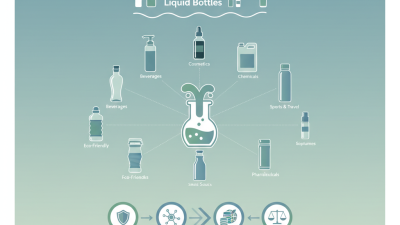
This reference model shows how global buyers commonly prioritize supplier evaluation. Quality consistency, regulatory compliance, tooling capability, production capacity, traceability, and export support should be verified through documentation, samples, audits, and testing before placing an order.
Evaluating China’s top liquid bottle suppliers requires more than comparing catalog photos and unit prices. Start with the intended liquid, fill temperature, viscosity, and storage period. A bottle for shampoo may fail with an essential-oil formula. Ask for resin specifications, recycled-content details, colorants, and relevant safety documentation. Reliable suppliers explain these limits clearly. Vague answers are warning signs.
Request samples from a current production batch, not only polished showroom pieces. Measure neck finish, wall thickness, weight, and cap fit with simple gauges. Then run leak, torque, drop, and heat-cycle tests using your actual closure. An experienced supplier should share inspection plans, defect classifications, and batch records. Visit the factory or hire an independent auditor to verify molding equipment, cleanliness, calibration, and packing conditions. Photos help, but they are not proof.
Price still matters, but tooling ownership, mold maintenance, lead times, and replacement policies can change the real cost. Check how the supplier handles rejected cartons, shipment damage, and specification changes. Ask for pilot production before approving a large order. Early samples can look excellent while mass production exposes uneven color or loose caps. That gap deserves attention. Choose evidence over confident promises, even when the cheaper quote feels attractive.
China Top 10 Liquid Bottle Manufacturers for Global Buyers
Leading Chinese liquid bottle manufacturers serve beverage, cosmetic, personal care, and household product markets worldwide. Their capabilities may include PET, HDPE, glass, and custom molding. A strong manufacturer should explain material grades, neck finishes, wall thickness, and production tolerances clearly. These details affect filling speed, leakage control, shelf appeal, and transport safety.
During supplier evaluation, request samples from the same production line used for your order. Check the bottle under pressure, after filling, and during repeated cap opening. Ask for quality records, factory audit access, export experience, and relevant testing documents. A professional team will discuss mold maintenance, color consistency, packaging protection, and lead times without vague promises. I would not treat a polished catalog as proof of capability. One weakness can remain hidden until mass production begins.
Tips: Compare samples, not only prices. Confirm minimum order quantities, artwork standards, inspection points, and replacement procedures before signing. Test filled bottles in realistic storage conditions, including heat, vibration, and stacking. Keep written specifications for every approval. This step feels slow, but it prevents expensive revisions. Also, allow time for communication gaps and holiday schedules. Even experienced buyers can underestimate them.
| Rank | Anonymized Supplier Profile | Primary Manufacturing Region | Main Bottle Materials | Typical Capacity Range | Common Bottle Applications | Manufacturing Capabilities | Closure Compatibility | Export-Oriented Services |
|---|---|---|---|---|---|---|---|---|
| 1 | Profile CN-LB01 | East China | PET, HDPE, PP | 30 ml–2,000 ml | Liquid food, beverages, personal care, household products | Injection stretch blow molding, extrusion blow molding, custom tooling | Standard screw, flip-top, disc-top, pump and spray closures | OEM/ODM development, multilingual documentation, export carton packing |
| 2 | Profile CN-LB02 | South China | PET, rPET, HDPE | 50 ml–1,500 ml | Drinks, sauces, nutrition liquids, personal-care products | High-speed PET production, lightweighting, neck-finish customization | 28 mm, 38 mm and other widely used screw-neck formats | Container-and-closure matching, palletization plans, private-label support |
| 3 | Profile CN-LB03 | Central China | HDPE, LDPE, PP | 100 ml–5,000 ml | Detergents, cleaners, lubricants, agricultural liquids | Extrusion blow molding, handle-bottle production, industrial packaging design | Screw caps, child-resistant closures and dispensing caps | Bulk-order production, export labeling, drop-test and leakage-test coordination |
| 4 | Profile CN-LB04 | East China | Clear glass, amber glass, soda-lime glass | 10 ml–1,000 ml | Pharmaceutical liquids, essential oils, cosmetics and specialty beverages | Glass forming, annealing, screen printing, frosting and surface decoration | Crimp, screw, dropper, spray and lotion-pump systems | Protective export packaging, sample approval and decoration matching |
| 5 | Profile CN-LB05 | South China | PET, acrylic, SAN, PP | 15 ml–500 ml | Serums, lotions, shampoos, hand-care and beauty products | Multi-cavity molding, hot stamping, silk screening and UV coating | Fine-mist sprayers, treatment pumps, droppers and lotion pumps | Color matching, artwork support, assembly and finished-set packaging |
| 6 | Profile CN-LB06 | North China | HDPE, PET, PP and recycled-content plastics | 100 ml–2,000 ml | Sanitizers, detergents, medical-care liquids and institutional cleaning products | Blow molding, clean-room assembly options, label-panel optimization | Trigger sprayers, pumps, flip-tops and tamper-evident caps | Batch traceability, barcode-ready packaging and container testing |
| 7 | Profile CN-LB07 | East China | PET, HDPE, PP and biodegradable polymer options | 30 ml–1,000 ml | Health supplements, liquid nutrition, sports and wellness products | Custom preform development, barrier-layer options and tamper-evident design | Child-resistant, induction-seal and standard screw closures | Export sample kits, carton optimization and documentation coordination |
| 8 | Profile CN-LB08 | Southwest China | Glass, PET and HDPE | 50 ml–750 ml | Tea beverages, sauces, condiments and premium liquid foods | Food-container molding, embossed decoration, labeling and cap assembly | Screw caps, lug caps, pourers and tamper-evident closures | Food-contact documentation, case packing and mixed-container sourcing |
| 9 | Profile CN-LB09 | North China | PET, HDPE, PP and multilayer plastic structures | 250 ml–20,000 ml | Industrial chemicals, automotive fluids, agricultural products and oils | Large-format blow molding, barrier packaging and high-strength handle designs | Wide-mouth, vented, child-resistant and induction-compatible closures | UN-packaging inquiry support, export pallets and transport testing |
| 10 | Profile CN-LB10 | East China | PET, rPET, HDPE, PP and glass | 20 ml–2,000 ml | Mixed-use liquid packaging for food, beauty, healthcare and household products | Small-batch prototyping, rapid tooling, decoration and contract assembly | Pumps, sprays, droppers, flip-tops, screw caps and specialty closures | Low-MOQ development, consolidated shipping and multilingual quality files |
Design capability separates basic suppliers from reliable production partners. Common options include oval bottles, square shoulder bottles, pump containers, and wide-mouth jars. Manufacturers can adjust neck finishes, wall thickness, color, embossing, silk printing, and custom molds.
Production audits should examine injection molding, blow molding, leak testing, and automated visual inspection. According to Smithers, lightweighting remains a major packaging trend worldwide. However, thinner walls may reduce drop resistance. That trade-off deserves practical testing, not assumptions.
Comparing liquid bottle manufacturers requires more than checking the lowest quotation. A professional buyer should request identical specifications from each supplier. Confirm bottle material, capacity, neck size, color, weight, and closure compatibility. A small change in plastic weight can affect both price and durability.
Ask for pre-production samples. Test leakage, thread fit, drop resistance, and surface quality under realistic conditions. Check whether the supplier controls incoming materials and keeps batch records. Certifications should match your destination market and product use. Request current test reports, factory certificates, and traceable documentation. A certificate alone is not proof of consistent quality. This is where many purchasing teams become too confident.
Export service can decide the real cost. Compare minimum order quantities, tooling charges, packaging methods, lead times, and payment terms. Confirm whether prices include inspection, loading, inland transport, or export documentation. Ask how the manufacturer handles damaged cartons and delayed shipments. Clear answers matter more than polished presentations.
A useful comparison table should show unit price, sample cost, mold ownership, production capacity, and delivery terms. Request a factory video call or an independent audit when possible. Some suppliers quote quickly but provide vague quality tolerances. That is a warning sign. However, even detailed quotations may contain omissions. Recheck every assumption before placing an order. Good export cooperation is built through written specifications, inspection points, and practical communication.