Small plastic bottles may look interchangeable on a shelf, yet their material, shape, and closure affect product protection, filling, transport, and end-of-life handling. Common options include clear PET bottles for drinks and personal-care products, opaque HDPE containers for lotions and household liquids, and PP bottles or jars for products needing greater heat resistance. Small details matter: a narrow neck can control pouring, while a ribbed shoulder can make a thin bottle easier to grip.
Industry data adds useful context. NAPCOR’s 2022 PET Recycling Report estimated that 29.1% of PET bottles were recycled in the United States that year. That figure describes PET bottles, not every small container or every region. UNEP’s 2023 report, Turning off the Tap, also examines how product design and reuse systems can reduce plastic pollution. As UNEP Executive Director Inger Andersen put it, “We need to turn off the tap on plastic pollution.” Her warning is relevant to bottle design, though a bottle’s impact depends on more than its material alone.
This guide compares bottle types by resin, format, and practical use, including travel-size, dropper, spray, and squeeze bottles. It also considers transparency, chemical compatibility, dispensing control, and recyclability. A compact bottle is not automatically a sustainable one. That distinction is easy to miss. Product requirements differ, and supplier specifications should be checked before choosing a package.
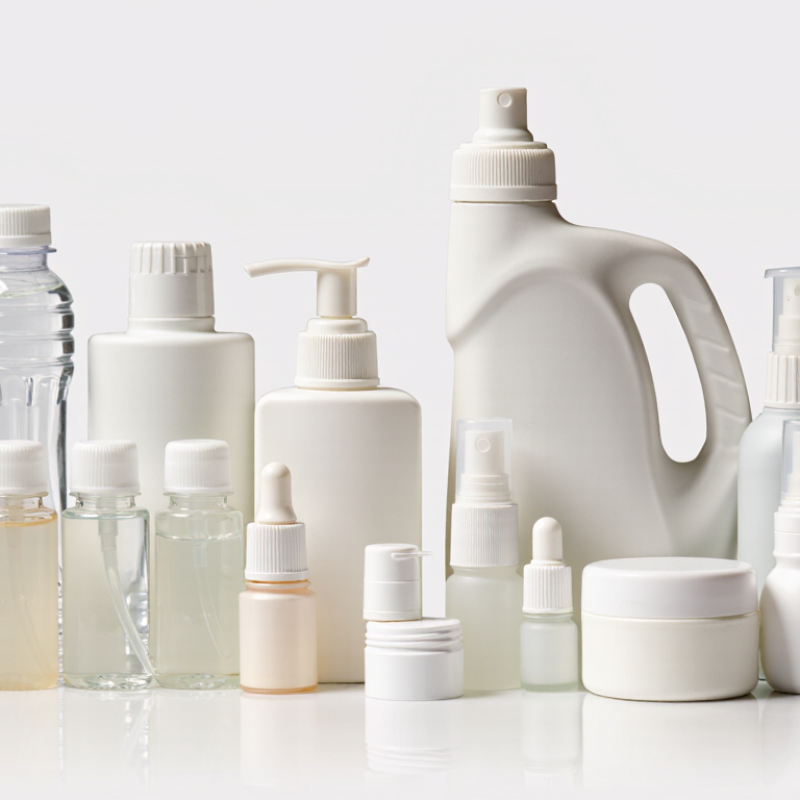
Small plastic bottles are classified by more than capacity. The first distinction is resin: PET is commonly clear and lightweight, while HDPE is often opaque and more resistant to impact. PP may be selected for closures or bottles needing greater heat tolerance. These are tendencies, not guarantees. Colorants, additives, and bottle design can change performance.
Manufacturing method offers another useful category. PET bottles are often made by stretch blow molding, which helps create thin, clear walls. Extrusion blow molding is common for squeezable HDPE containers. Shape and finish matter too: a narrow neck controls pouring, while a wide mouth makes filling easier. Check the neck finish alongside the cap; a mismatch can cause leaks. Small-bottle size itself has no single universal cutoff, so buyers should compare stated volume and dimensions.
End use adds practical detail. A bottle for lotion may need a controlled dispensing closure, while a sample container may prioritize compact dimensions and a secure seal. Resin, wall thickness, opacity, and barrier needs all affect suitability. PlasticsEurope’s Plastics – the Fast Facts 2023 report estimates packaging represented 39.1% of European plastics demand in 2022. That figure covers packaging broadly, not small bottles alone. Categories overlap, and a neat label can hide important differences. Check technical specifications, not appearance alone.
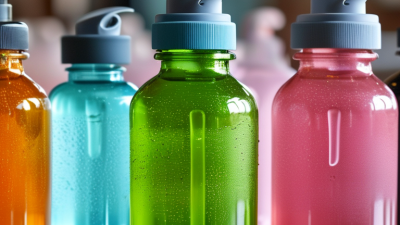
Small plastic bottles come in several familiar shapes, each suited to different handling and storage needs. Cylindrical bottles are easy to grip and label, while their straight sides fit neatly into many cartons. They are common, but can roll when placed on a smooth counter. A flat-sided or oval bottle is less likely to roll and may feel more comfortable in a pocket. Its wider profile, however, can take up more room in a packed bag. Square bottles use shelf space efficiently, though their corners may feel less comfortable in the hand. Small details matter.
Neck and shoulder designs also change how a bottle pours and closes. A narrow neck can help control liquid flow, while a wider opening makes filling and cleaning easier. Rounded shoulders guide liquid toward the opening; steep shoulders create a more compact silhouette. Caps may be simple screw tops, flip tops, or dispensing closures, depending on the product’s thickness and intended use. A tall, slender bottle looks convenient, yet it may tip more easily when nearly empty. A squat bottle is steadier, but harder to grip with wet hands. These trade-offs are easy to overlook when choosing a shape from a drawing rather than testing a filled sample.
Small plastic bottles commonly use PET, HDPE, PP, or LDPE, each suited to different needs. PET is clear and lightweight, so users can see the liquid level. It is common in beverage and personal-care bottles. HDPE is usually opaque and resists many everyday chemicals, making it useful for household cleaners and toiletries. PP tolerates more heat than PET, while LDPE’s flexibility suits soft, squeezable containers. The feel matters: a rigid bottle is easier to stack, while a soft one dispenses thick lotion with less effort.
Material choice also affects recycling. NAPCOR’s 2023 PET Recycling Report estimated the U.S. PET bottle recycling rate at about 33%. That figure is a useful benchmark, not a guarantee that any bottle will be recycled. Color, labels, caps, and local sorting systems can affect the outcome. Recycled PET can be used in some new packaging, but its availability and quality vary. HDPE bottles may also be recyclable where collection systems accept them. A practical detail often overlooked: matching the cap and bottle materials can simplify sorting, but designs differ. The best material depends on the product, dispensing needs, and local recycling access.
Small plastic bottles are easiest to choose by what they need to hold. For lotions, shampoo, and liquid soap, look for squeeze bottles with flip-top caps or narrow dispensing openings. These make it easier to control each portion, especially beside a sink or in a gym bag. A small bottle with a fine-mist sprayer suits facial sprays or water-based hair products. Thick formulas may clog the nozzle, though, so test the product before filling several bottles.
For drinks, sauces, and other food items, choose bottles made from materials intended for food contact, with closures that fit securely. Clear PET bottles show the contents, while opaque HDPE can help shield light-sensitive products. Neither material is right for every formula or temperature. Essential oils, acidic liquids, and hot contents may need specific compatibility checks. For samples or short-term storage, small bottles help reduce waste, but a tiny label can be hard to read. That detail is easy to overlook.
Tips: Match the cap to the product, then check for leaks with a small test fill. Leave a little headspace, and label the contents and fill date. A bottle may look sturdy but still crack after repeated squeezing; inspect it during use.
| Bottle Type | Typical Product or Use | Common Materials | Typical Capacity | Common Closure or Dispenser | Useful Features and Considerations |
|---|---|---|---|---|---|
| Travel squeeze bottle | Shampoo, conditioner, lotion, and other personal-care liquids | LDPE, HDPE, or PET | 30–100 mL | Flip-top, screw cap, or disc-top cap | Flexible LDPE is easy to squeeze; firmer HDPE and PET bottles hold their shape. Check travel rules and product compatibility before filling. |
| Fine-mist spray bottle | Facial toner, hair-care products, room sprays, and cleaning solutions | PET or HDPE | 30–120 mL | Fine-mist trigger or pump sprayer | Designed to disperse liquid as a fine spray. The sprayer and bottle materials should be suitable for the formula being stored. |
| Dropper bottle | Serums, essential-oil blends, liquid supplements, and craft liquids | PET or LDPE | 5–60 mL | Screw cap with pipette or dropper insert | Allows controlled dispensing in drops. Plastic dropper components may not suit every solvent or concentrated oil, so verify compatibility. |
| Disc-top or flip-top bottle | Hand wash, lotion, travel toiletries, and other frequently used liquids | HDPE or PET | 30–250 mL | Hinged flip-top or disc-top closure | Provides convenient one-handed access. The opening size and closure design affect how easily thicker products dispense. |
| Fine-tip dispensing bottle | Glue, ink, hobby materials, and precision application liquids | LDPE or HDPE | 15–120 mL | Pointed nozzle, often with a cap | The narrow tip supports targeted dispensing. LDPE is commonly chosen when a squeezable bottle is needed. |
| Small medicine or tablet bottle | Tablets, capsules, and other solid-dose products | HDPE or PET | 15–120 mL | Screw cap, sometimes with a child-resistant design | Typically has a wide opening for access to solid contents. Packaging requirements depend on the product and where it is sold. |
| Sample or specimen bottle | Small liquid samples, laboratory collection, and field sampling | HDPE or PP | 10–250 mL | Screw cap, sometimes with a leak-resistant liner | Often selected for a secure closure and practical handling. Choose a material and container specification appropriate to the sample and test. |
| Small reagent or dispensing bottle | Laboratory liquids, educational use, and controlled liquid dispensing | HDPE, LDPE, or PP | 30–250 mL | Screw cap, dropper insert, or dispensing nozzle | Material suitability varies by chemical, concentration, and storage conditions. Consult compatibility data before storing reagents. |
| Mini beverage bottle | Water, juice, and other ready-to-drink beverages | PET | 100–350 mL | Screw cap | Clear PET is commonly used for lightweight beverage packaging. Use food-contact packaging designed for the intended beverage and storage conditions. |
Closures determine how a small plastic bottle feels and performs in daily use. A screw cap is simple and secure for lotions, oils, and travel-size liquids. A flip-top or disc-top lets users dispense product with one hand, while an orifice reducer controls drops and helps limit spills. Fine-mist sprayers suit watery formulas; lotion pumps work better with thicker products. Match the closure to the liquid’s viscosity, and test it with the actual formula. A cap that works well with water may clog with a thicker liquid.
Small details matter. A narrow opening can reduce mess, but frustrate users when the product is viscous. A loose fit can leak in a bag; an overly tight one may be difficult to open. NAPCOR’s 2023 PET Bottle Recycling Report recorded a 29.1% U.S. PET bottle recycling rate for 2022. That figure makes material choices worth considering, too: check whether the bottle and closure are compatible with recycling guidance in the intended market.
Tips: Fill sample bottles and test them upright, sideways, and after repeated opening. Check leakage, dispensing amount, and ease of use. Keep notes—small differences in cap fit can be easy to miss.
Nominal neck-finish diameter for three commonly used 410-style finishes. Flip-top, disc-top, fine-mist spray, and pump closures are available in different finishes; match the closure to the bottle.
The first number in a finish such as 20-410 indicates its nominal neck diameter in millimeters; “410” identifies the thread finish. Actual closure compatibility should be confirmed against the bottle’s specified finish.