1941 West Fort St

Detroit, MI 48216

313-496-0550

Mon - Fri 8:45 a - 4 p ET

Porter Bottle Company

How to Choose Honey Bottles for Global Sourcing in 2026?

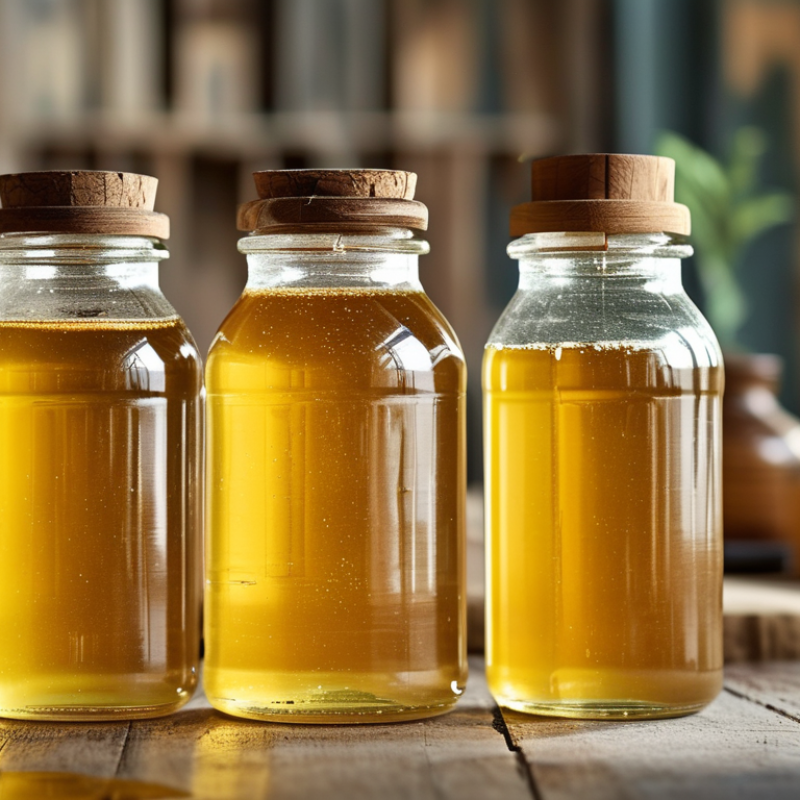
Choosing honey bottles for global sourcing in 2026 requires more than comparing prices and attractive shapes. The bottle must protect honey during long transport, warehouse storage, and repeated customer use. Glass offers strong barrier performance and a premium appearance. Food-grade PET can reduce weight, breakage, and freight costs. Yet each material creates different recycling, closure, and market expectations.

Packaging consultant Elena Morris explains, “A good honey bottle protects the honey before it sells the story.” Her point is practical. A clear bottle should showcase color without exposing the product to unnecessary light. A narrow neck can control pouring, but crystallized honey may move slowly. The cap needs a reliable liner, clean threads, and a seal that survives vibration. Small details matter.

Global buyers should examine supplier experience, food-contact documentation, mold ownership, minimum order quantities, and production consistency. Request samples from different batches. Test them with real honey, not only water. Check leakage after inversion and rough handling. Inspect label space, pallet efficiency, and carton strength. A beautiful bottle that arrives cracked is not a successful choice.

Supplier audits also deserve attention. Ask for traceable materials, quality records, and clear corrective-action procedures. Sustainability claims need evidence, not vague language. Recycled content, lightweighting, and reusable designs may help, but they can also affect clarity and strength. No checklist is perfect. I have seen low-cost packaging become expensive after delays, breakage, or redesigns. The best honey bottles balance protection, appearance, compliance, logistics, and realistic market needs. That balance may look less impressive at first, but it usually performs better over time.
How to Choose Honey Bottles for Global Sourcing in 2026?

Define Honey Specifications with Codex Moisture Limit of ≤20%

How to Choose Honey Bottles for Global Sourcing in 2026?

Honey specifications should begin with moisture control. The Codex Alimentarius Standard for Honey, CXS 12-1981, sets a maximum moisture level of 20% for most honey. Heather honey and baker’s honey may reach 23% under specified conditions. This limit matters because excess water can encourage fermentation during storage and transport.

In practical sourcing, request a moisture result for every production lot. A handheld refractometer is useful for screening, but laboratory confirmation offers stronger evidence. Require the test method, sampling date, lot number, and laboratory details on the certificate of analysis. Bottle selection should match the risk. Tight caps, food-grade seals, and low headspace can help protect honey after filling. The Codex standard also identifies composition, cleanliness, and labeling requirements, so moisture cannot be treated as the only quality measure.

Tips: Ask suppliers to test honey before bottling and again after filling. Compare readings across several cartons, not one sample. Also check closure torque and leakage after temperature cycling. A 20% reading is not automatically safe if sampling is poor. That is an easy mistake. Packaging teams sometimes trust one attractive laboratory report too much. In my experience, repeated checks reveal seasonal variation, uneven blending, or moisture pockets near the tank surface. Build these checks into the purchasing specification before approving bottle dimensions or shipment quantities.
Select Food-Contact Materials Under FDA 21 CFR and EU 1935/2004

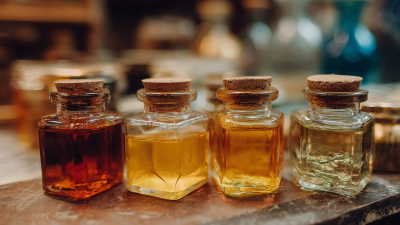
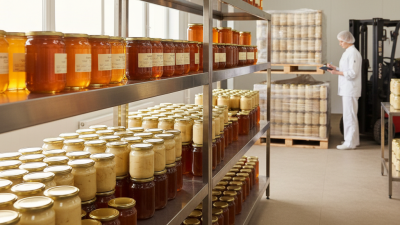
Choosing honey bottles for global sourcing in 2026 starts with food-contact compliance, not appearance. FDA 21 CFR requirements depend on the bottle material, additives, colorants, closures, and intended use. Ask suppliers for a current declaration of compliance and supporting migration data. Confirm the tested conditions match honey, storage time, temperature, and filling process.

The European market requires compliance with Regulation (EC) No 1935/2004. The packaging must not transfer substances that endanger health, alter honey composition, or damage its taste and smell. For plastic bottles, additional requirements may apply under specific EU measures. Check the declaration of compliance, traceability records, and good manufacturing practice documentation. Do not accept a generic “food grade” statement.

A practical review should examine the complete package. Test the bottle, cap, liner, seal, and label together. Honey can remain in contact with packaging for months.

Leakage may appear around the neck after transport, especially when temperatures change. Request samples from the actual production line, not only showroom pieces. Measure wall thickness and closure torque.

A certificate alone is not enough.

Ask who performed the tests, which standard was used, and when testing occurred. Requirements can change. Verify current rules with qualified regulatory specialists before placing a large order. I would also record batch numbers, material specifications, and corrective actions. Small documentation gaps often become expensive delays.

Match Bottle Size, Closure, and Seal to GS1 Retail Requirements

How to Choose Honey Bottles for Global Sourcing in 2026?

Choosing a honey bottle starts with the retail data it must carry. GS1 standards support product identification, barcode scanning, and supply-chain traceability. They do not prescribe one universal bottle size or closure. Match the net content, label area, and bottle dimensions to the assigned product identifier. A 250-gram bottle may need a wider front panel than a tall 500-gram format. Curved surfaces can distort barcodes. Test the actual filled bottle, not only a digital drawing.

Closure selection affects both handling and retail acceptance. Use a cap that resists leakage during transport and opens without excessive force. A tamper-evident feature can show whether the package was opened before purchase. If using an induction seal, confirm that the liner bonds consistently with the bottle material. Keep the seal flat and inspect the rim for small defects. One weak seal can damage an entire case.

Leave adequate quiet zones around the barcode and avoid placing it near seams, shoulders, or dark graphics. Verify scan performance under store lighting and after cold-chain or warehouse exposure, when relevant. Case packaging may require a separate identifier and logistics barcode. Sourcing teams should request dimensional drawings, closure samples, seal test records, and production inspection data. I have seen attractive samples fail because the cap changed after tooling. That mistake is easy to miss. Recheck every revision before approval. GS1 guidance should be reviewed alongside destination-market packaging and labeling rules.

Audit Suppliers Through ISO 22000 and BRCGS Food-Safety Standards

How to Choose Honey Bottles for Global Sourcing in 2026?

When sourcing honey bottles globally, audit the supplier’s food-safety system before comparing prices. ISO 22000 should show hazard analysis, risk controls, traceability, and documented corrective actions. Ask for the certificate, certification scope, production site, and expiry date. A certificate alone proves little.

BRCGS Food Safety audits can reveal practical weaknesses. Check how the factory controls glass breakage, bottle cleaning, storage humidity, pests, and foreign materials. Request recent audit findings and evidence that problems were actually closed. Inspect sample bottles closely. Look for chips, sharp rims, uneven necks, and loose caps. Food-contact declarations should match the exact bottle and closure materials.

Tips: Ask for a live video tour of the filling-area entrance and finished-goods warehouse. Compare batch codes with shipping records. Test one carton after vibration and temperature changes. Do not rely only on polished documents. In my experience, paperwork can look excellent while warehouse discipline remains inconsistent. That is easy to miss. Also, ISO 22000 and BRCGS do not replace your own inspection. Define acceptance limits, retain samples, and record every supplier response. A small overlooked defect can become a costly retail complaint.

Validate Packaging with ASTM D4169 Transport and Drop-Test Criteria

How to Choose Honey Bottles for Global Sourcing in 2026?

A honey bottle must survive more than filling and shelf display. It may face vibration, compression, pallet movement, and sudden drops during international transport. ASTM D4169 helps evaluate the complete shipping unit under defined distribution cycles and assurance levels. Test the bottle, closure, label, carton, dividers, and pallet together. A beautiful bottle can still fail when the cap loosens or the shoulder cracks.

Choose a test configuration that matches the expected shipping route, handling method, and filled weight. Include free-fall drop testing at realistic orientations, especially the base, side, and closure area. Inspect for leakage, broken glass, cap displacement, panel deformation, and unreadable labels. For plastic bottles, check permanent dents after compression. For glass, examine tiny chips carefully. They are easy to miss.

Tips: Request the laboratory report, test sequence, specimen details, and acceptance criteria. Ask whether the tested package matches production packaging. Do not rely on an empty bottle test. Honey changes the weight and stress pattern. Results may also vary with pallet height and carton moisture. I have seen packaging pass a basic drop test, yet fail after vibration and compression. That is why retesting after design changes is worth the added time. ASTM D4169 supports structured evaluation, but it does not replace practical route validation or careful supplier communication.

How to Choose Honey Bottles for Global Sourcing in 2026? — Validate Packaging with ASTM D4169 Transport and Drop-Test Criteria

ASTM D4169 is a distribution-cycle framework rather than a single universal test schedule. Select the distribution cycle, assurance level, package weight category, stacking duration, vibration profile, and acceptance criteria according to the actual shipping route and current project specification. Free-fall drop heights shown below are commonly used ASTM D5276 weight-band references for drop-test planning and should be confirmed against the latest applicable standard and laboratory protocol.
Bottle Format Recommended Material Typical Nominal Capacity Typical Empty Bottle Mass Typical Filled Unit Mass Recommended Secondary Packaging Global-Sourcing Suitability Primary Validation Focus
Small squeeze bottle Food-contact HDPE or LDPE 250–350 mL 18–35 g 340–480 g Corrugated carton with molded or die-cut dividers; tamper-evident closure; induction seal where required Low transport weight, good resistance to impact, and suitable for parcel and mixed-case distribution Cap leakage, shoulder deformation, seal integrity, and compression recovery
Standard retail bottle PET 450–600 mL 25–45 g 620–790 g Regular-slotted corrugated case with dividers or paperboard cells; palletized with stretch wrap Strong balance of clarity, weight reduction, impact resistance, and freight efficiency Paneling, base deformation, closure torque retention, leakage, and label scuffing
Premium retail bottle Glass 450–750 mL 300–650 g 900–1,350 g Heavy-duty corrugated carton with full-cell dividers, cushioning at the base and neck, and pallet edge protection High visual appeal and chemical stability, but higher breakage risk, packaging cost, and freight weight Glass fracture, closure displacement, carton puncture, abrasion, and pallet stability
Large food-service bottle HDPE or PET 900–1,000 mL 45–80 g 1,180–1,400 g Five-ply or heavy-duty corrugated case with full-depth dividers and reinforced pallet pattern Efficient for wholesale and food-service channels when case handling and stacking are controlled Top-load compression, creep under storage load, cap leakage, and case bulging
Wide-mouth jar Glass or food-contact PET 250–500 mL 180–420 g 500–900 g Partitioned corrugated carton with neck and base cushioning; closure liner or induction seal Good filling and dispensing access, but wide shoulders require careful divider and clearance design Rim chipping, lid loosening, liner compression, seal failure, and carton clearance
Validation Area Planning Data or Test Condition ASTM-Related Reference Suggested Acceptance Criteria Sourcing Decision
Distribution-cycle selection Use the actual route: factory-to-port, ocean freight, import warehouse, regional distribution, retail delivery, or parcel shipment. ASTM D4169 distribution-cycle framework; select the applicable distribution cycle and assurance level. Documented test plan matches the intended logistics route and handling environment. Do not approve a bottle using only a laboratory drop test when the product will also face stacking, vibration, and climate exposure.
Package weight band Determine the gross weight of the packed shipping case before selecting the free-fall drop height. ASTM D5276 planning reference for manually handled packaged products. Use the correct gross-weight category and test the most vulnerable package orientation. Heavier glass cases normally require stronger dividers, lower case counts, and tighter pallet controls.
Drop height: up to 9 kg case Approximately 760 mm free fall. Common ASTM D5276 weight-band reference: up to approximately 9 kg. No leakage, broken bottle, detached closure, or unsafe sharp edge after impact. Suitable for small mixed cases and parcel-style handling when secondary packaging remains intact.
Drop height: 9–18 kg case Approximately 610 mm free fall. Common ASTM D5276 weight-band reference: approximately 9–18 kg. No loss of product containment; carton remains capable of protecting remaining units. Review divider strength and closure retention before reducing packaging material.
Drop height: 18–27 kg case Approximately 460 mm free fall. Common ASTM D5276 weight-band reference: approximately 18–27 kg. No critical damage to bottle, closure, seal, or carton that could create leakage in distribution. Often relevant to palletized honey cases containing multiple 500–750 mL bottles.
Drop height: 27–45 kg case Approximately 310 mm free fall. Common ASTM D5276 weight-band reference: approximately 27–45 kg. No structural collapse, product release, or bottle-to-bottle contact damage. Consider reducing case quantity if manual handling creates excessive impact energy or ergonomic risk.
Drop height: 45–68 kg case Approximately 200 mm free fall. Common ASTM D5276 weight-band reference: approximately 45–68 kg. Case and pallet interface remain stable; no concealed bottle damage after inspection. Use mechanical handling and strong pallet patterns rather than relying on case strength alone.
Compression and stacking Apply the planned warehouse and container stacking load, including storage duration, humidity, and pallet pattern. ASTM D4169 compression and stacking components; ASTM D642 may be used for container compression evaluation. No unacceptable case bulging, loss of closure clearance, bottle deformation, or pallet instability. High humidity and long ocean-storage periods require conservative corrugated-board and pallet specifications.
Vibration and transport movement Use the selected distribution-cycle vibration profile and test the case in the intended shipping orientation. ASTM D4169 vibration component; vibration profile depends on the selected distribution cycle. No abrasion-through, cap loosening, label failure, seal damage, or bottle-to-bottle fracture. Glass requires clearance control; PET and HDPE require scuff and closure-torque checks.
Seal and leakage inspection Inspect every bottle and closure after conditioning, vibration, drops, and compression. Use the project specification together with applicable packaging and closure test methods. Zero visible honey leakage, no seal displacement, and no closure back-off beyond the approved torque range. Reject packaging that passes carton inspection but allows even minor product leakage.
Climate conditioning Condition samples for the expected route, such as ambient, high-temperature, high-humidity, or cold exposure. ASTM D4169 permits conditioning and environmental considerations appropriate to the distribution cycle. Bottle, closure, label, adhesive, and carton maintain function after conditioning and transport tests. For warm-climate routes, prioritize closure performance and adhesive stability over appearance alone.
Final sourcing gate Compare total packaging mass, case pack, pallet utilization, breakage risk, leakage rate, and test performance. Use a documented packaging qualification report linked to the selected ASTM D4169 plan. All critical failure criteria pass, and any cosmetic damage remains within the approved limit. Choose the lightest package that passes the complete transport simulation without compromising food safety or containment.
Scroll to Top